A municipal utility walks into a bank with an investment plan. Nothing unusual, that's how most Stadtwerke finance their way, often through a local Sparkasse they've worked with for decades. But increasingly the answer isn't the one they expected.
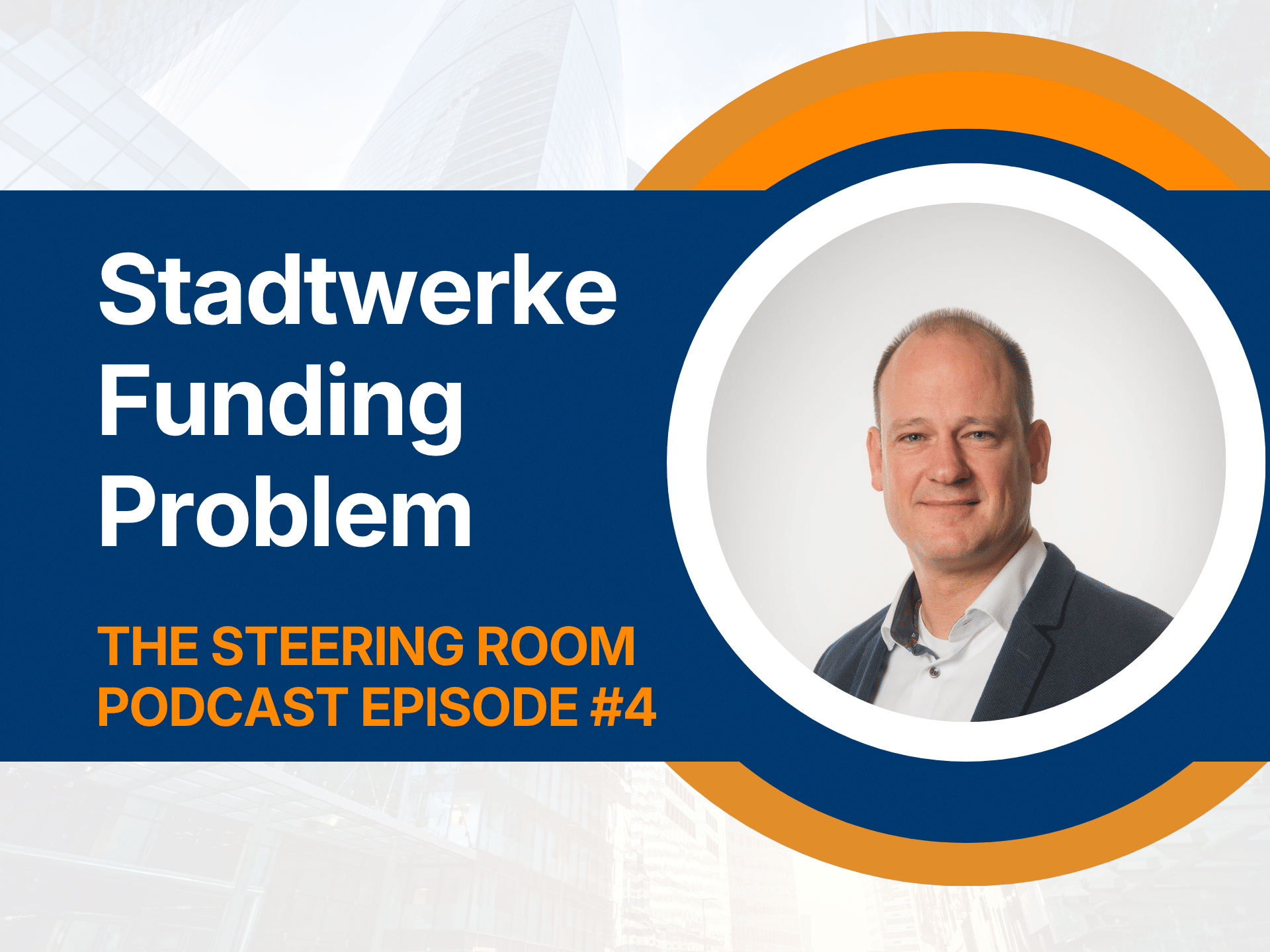
Christian Barte, CEO of Centida and a former CFO, explains what the bank sees. In regions where the population is shrinking, the business case that used to repay in twenty years now stretches toward fifty. The bank responds predictably: a higher interest rate, more lenders at the table, or a partner brought in to share the risk.
What's driving it isn't one thing. Gas, historically the most profitable and least regulated part of the business, is being phased out. The green transition pushes costs up while price caps hold revenue down. And Germany has hundreds of small utilities, many serving markets that are contracting rather than growing.
None of this was a surprise. That's the uncomfortable part. The forecasts existed years ago, the models predicted it, and most people in the sector could have described exactly this scenario. The gap was never prediction. It was the distance between knowing something is coming and the moment an organisation actually acts.
Christian's argument about the fix is counterintuitive. A better financial model doesn't convince a bank, not on its own, and not first. What a bank wants is a plausible strategy: what the business looks like in ten years, who the customers are, what's being offered. Then how that gets operationalized. Only then the numbers.
Underneath that sits a structural point most mid-sized utilities haven't addressed. When every business model sits inside a single entity, the bank sees one averaged-out risk profile and cannot price it. Separate them, and each can be valued and financed on its own terms.
He's also candid about something else: as a CFO, he avoided consultants wherever he could.