Every controller has asked the question by now: will AI take my job?
The data tells a more interesting story than the headlines. AI use in controlling and accounting in German companies rose from 17% to 25% in a single year. Fast growth, but it still means three out of four companies haven't started.
And here is the part people miss. The companies already using AI are the least pessimistic about jobs. Only 9% of them expect a significant drop in headcount over the next two years, compared with 15% of companies that don't use AI. They are also twice as likely to expect their workforce to grow.
One reading: companies that have started know what AI can and can't do. Companies that haven't are left imagining it, and imagining the worst.
A word that’s easy to misunderstand
Part of the confusion starts with the word itself. In Germany, controlling means steering a company with numbers: planning, forecasting, cost accounting and reporting to management. The closest English equivalent is FP&A, which is why the debate about AI in FP&A and AI in controlling is really the same one. In the US, a controller usually runs financial accounting, a different job.
And controlling has never meant supervising people. Its purpose is to help the business decide where to go. That distinction matters now, because AI is taking over the reporting side of the job, not the steering side.
What AI changes
AI is very good at repetitive work. Building the monthly report. Collecting and reconciling data from different systems. Much of the month-end routine. In a typical Mittelstand company, that is where most of a controller's time goes today.
What AI doesn't do is decide what to measure, challenge an assumption from sales, explain to the owner what a number really means, or take responsibility for a forecast. That part of the job doesn't shrink. It grows because the controller finally has time for it.
For the controller, that changes the job itself: less time in the back room preparing numbers, more time with sales, operations and the owner, explaining what the numbers mean.
Using AI isn’t the same as using it well
Starting is only the first step. Among German companies already using AI, not one says it exploits AI's potential fully. Just 3% say they use it strongly, while 59% say they don't exploit it at all.
For finance teams, that gap is the real opportunity. The value doesn't come from opening a chat window. It comes from rethinking how the work is done.
Why waiting is the real risk
Two thirds of German companies rate their employees' AI skills as low. But skills follow use: among companies already working with AI, 40% rate their staff's skills as high, compared with 14% of those that aren't.
At the same time, many experienced controllers in the Mittelstand will retire in the coming years, often in regions where replacing them is already difficult.
Put together, AI is not only a threat to controlling jobs. For many mid-sized companies, it is one of the few realistic ways to keep running their finance processes with fewer people. The companies that start now build the skills while they still have experienced staff to guide them. The ones that wait may end up with neither.
The full conversation
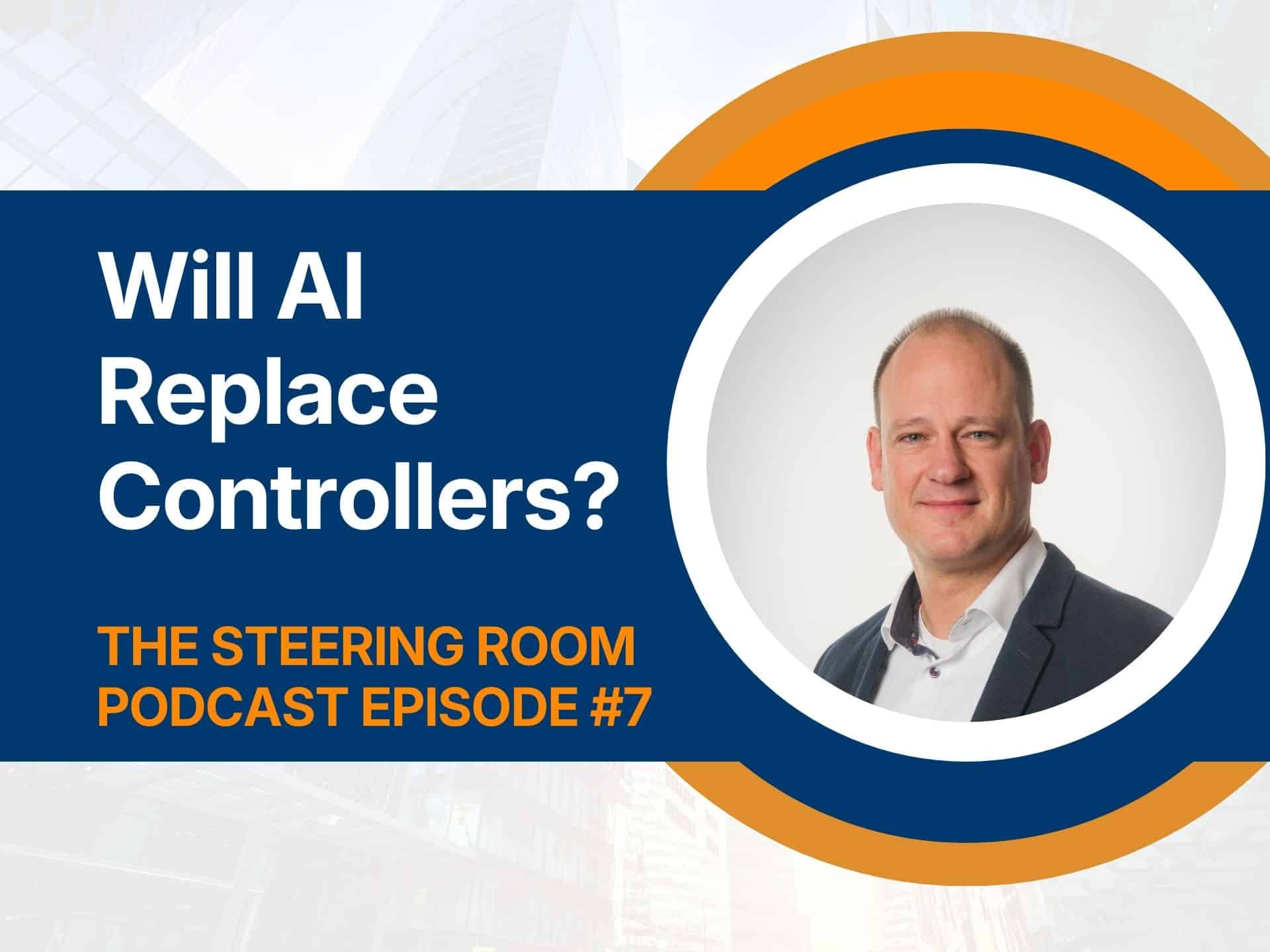
In episode seven of The Steering Room, the first part of our FP&A series, Christian Barte, CEO of Centida and a former CFO, goes further. He walks through what a controlling team in a mid-sized company does, which tasks AI can take over today, how a CFO can deal with job cuts and a talent shortage at the same time, where to start.